
Dupuytren’s contracture
A thickened cord beneath the skin of the palm can gradually pull a finger into a bent position. Assessment helps establish whether monitoring or treatment is appropriate for your hand.
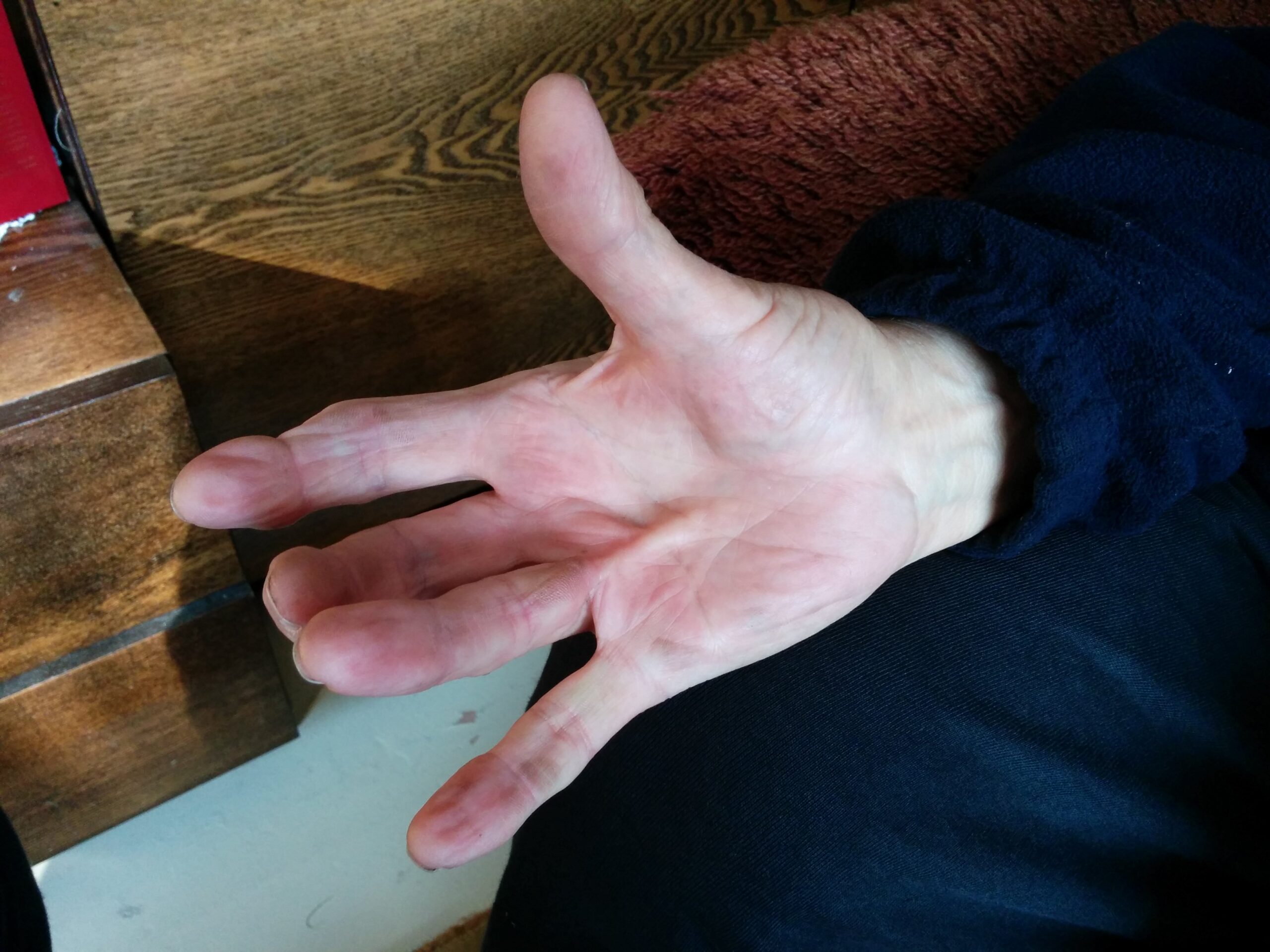

What is Dupuytren’s contracture?
Dupuytren’s disease affects the fascia, a connective-tissue layer under the palm’s skin. Firm nodules and skin dimples may develop, followed by cords that restrict finger extension. These cords are different from the tendons. The ring and little fingers are most often affected; either or both hands may be involved. Some people retain only small nodules, while others develop increasing contracture.
The Hand Society: condition and symptoms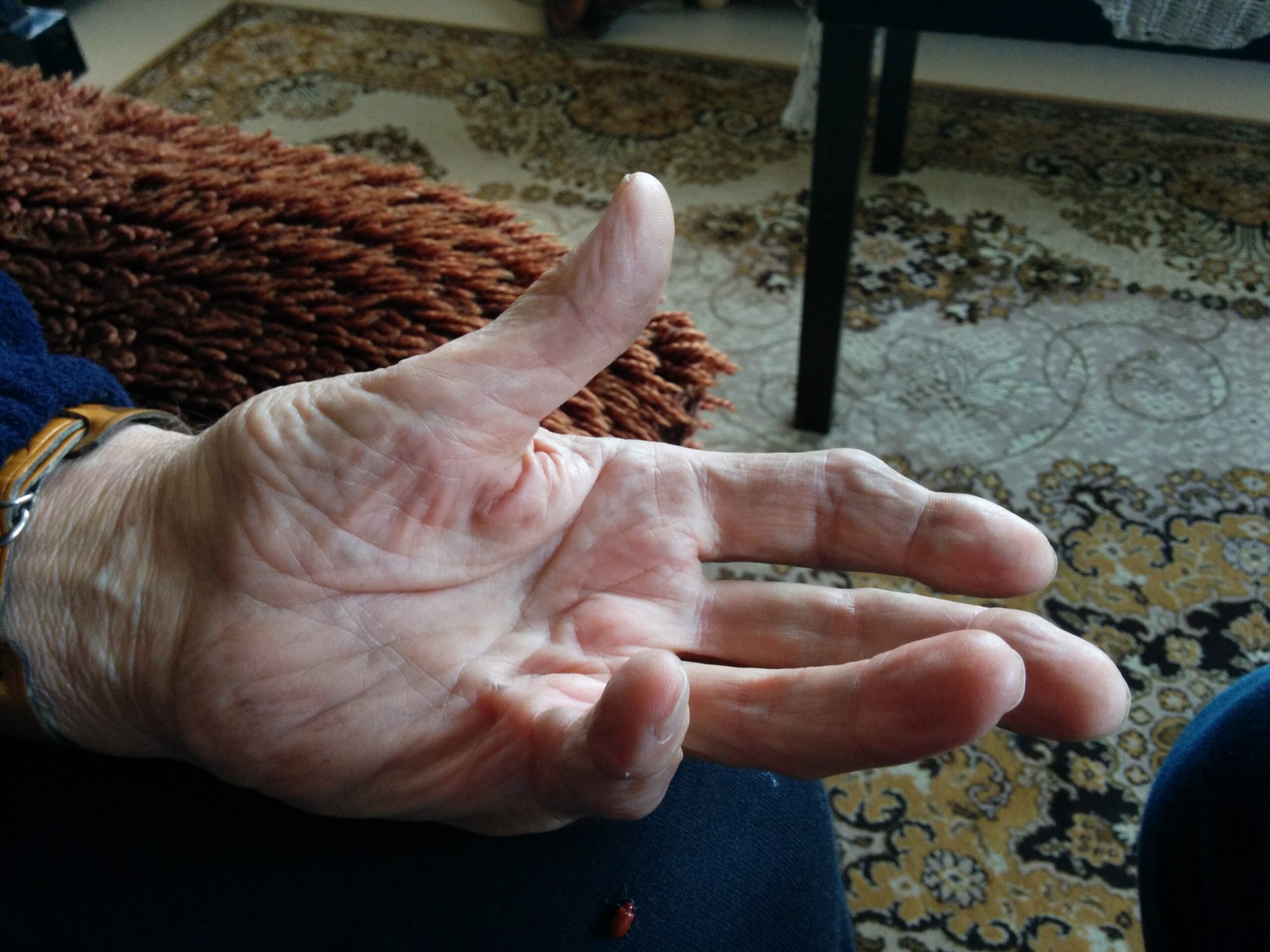

These are educational photographs from Wikimedia Commons, not treatment results from this clinic.
Why does it develop?
The cause is not fully understood. Family history is important, and the condition becomes more common with age, particularly in men. Diabetes, smoking and heavy alcohol use are associated factors, although many affected people have none of these. Symptoms and progression vary between individuals.
BSSH: causes and progressionWhen should I seek advice?
Arrange an assessment if you cannot place your palm and fingers flat on a table, or if washing, wearing gloves or putting your hand in a pocket becomes difficult. The condition is often painless. A new or uncertain hand lump should be examined.
NHS: when to seek assessmentYour surgeon checks the nodules and cords, measures finger movement and discusses their effect on daily life. These findings help guide treatment and monitor change. Avoid forcing a contracted finger straight; forceful stretching can cause injury.
AAOS: examination and stretchingTreatment options
Monitoring may suit mild disease. Treatment choice depends on the affected joints, hand function, health and your priorities.
- Needle fasciotomy: a needle releases the cord under local anaesthesia. Recovery is usually quicker; recurrence is more frequent than after open surgery.
- Limited fasciectomy: surgery removes affected fascia to improve straightening.
- Dermofasciectomy: affected fascia and skin are removed, with a skin graft used in selected cases.
Xiapex’s EU marketing authorisation was withdrawn for commercial reasons, effective March 2020. Availability must be checked with your specialist; injections should not be assumed to be routinely available in Cyprus.
EMA: Xiapex authorisation statusRecovery and recurrence
Wound care, exercises and hand therapy are tailored to the procedure; a night splint may be advised. Recovery varies with the extent of disease and surgery.
BSSH: aftercareTreatment can improve function but does not cure the underlying disease. Full straightening is not always possible, and contracture can return. Risks include bleeding, infection, numbness and stiffness; your surgeon will explain the risks relevant to your treatment.
NHS: outcomes and risksSources and further reading
Information updated: 14 September 2026.
General patient information. A consultation is needed to confirm the diagnosis and agree an individual treatment plan.
Understand your options
Arrange a consultation with Dr Constantinos Kritiotis in Paphos or Limassol.