Διάστρεμμα
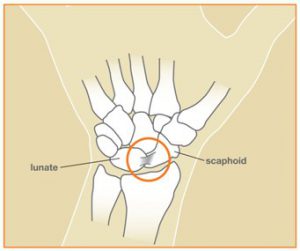
Το διάστρεμμα είναι κάκωση ενός συνδέσμου, δηλαδή του συνδετικού ιστού που συγκρατεί τα οστά μεταξύ τους σε μια άρθρωση. Στον καρπό, ο συχνότερα τραυματιζόμενος σύνδεσμος είναι ο σκαφομηνοειδής, ο οποίος συνδέει το σκαφοειδές με το μηνοειδές οστό. Οι κακώσεις μπορεί να κυμαίνονται από ήπια διάταση έως πλήρη ρήξη του συνδέσμου. Συχνά προσβάλλεται επίσης το τριγωνικό ινοχόνδρινο σύμπλεγμα (TFCC).
Αιτίες
Τα διαστρέμματα του καρπού προκαλούνται συνήθως από πτώση πάνω σε τεντωμένο χέρι, με αποτέλεσμα ο καρπός να κάμπτεται προς τα πίσω και να καταπονούνται οι σύνδεσμοι.
Σημεία και Συμπτώματα
Μετά από διάστρεμμα, ο καρπός συνήθως παρουσιάζει οίδημα και εκχύμωση και η κίνηση γίνεται επώδυνη. Η κάκωση συχνά προκαλεί περιορισμό της κινητικότητας και ενόχληση στις καθημερινές δραστηριότητες.
Διάγνωση
Η αξιολόγηση αρχίζει με κλινική εξέταση για τον ακριβή εντοπισμό του πόνου και τον έλεγχο της κινητικότητας του καρπού. Οι ακτινογραφίες χρησιμοποιούνται για τον αποκλεισμό κατάγματος ή εξαρθρήματος και, σε ορισμένες περιπτώσεις, ζητείται μαγνητική τομογραφία για λεπτομερή απεικόνιση της κάκωσης των συνδέσμων.
Αντιμετώπιση οξείας κάκωσης
Η αρχική θεραπεία μπορεί να περιλαμβάνει ακινητοποίηση του καρπού με νάρθηκα ή γύψο. Σε ορισμένες περιπτώσεις απαιτείται χειρουργική επέμβαση. Οι επιλογές περιλαμβάνουν αρθροσκοπική αποκατάσταση μέσω μικρών τομών με κάμερα και ειδικά εργαλεία ή ανοικτή επέμβαση για συρραφή και σταθεροποίηση του τραυματισμένου συνδέσμου με βελόνες, βίδες ή άλλα υλικά. Μετεγχειρητικά απαιτείται συνήθως ακινητοποίηση για αρκετές εβδομάδες.
Χρόνιες κακώσεις
Σε κακώσεις που επιμένουν για μήνες ή χρόνια, η θεραπεία εξαρτάται από την έκταση της βλάβης. Όταν η βλάβη του χόνδρου είναι μικρή, μπορεί να εξεταστεί ανακατασκευή του συνδέσμου. Εάν υπάρχει μέτρια ή σοβαρή χόνδρινη βλάβη ή αρθρίτιδα, ο πόνος, η δυσκαμψία και το οίδημα μπορεί να επιμένουν. Η αρχική αντιμετώπιση μπορεί να περιλαμβάνει νάρθηκα, μη στεροειδή αντιφλεγμονώδη φάρμακα και εγχύσεις κορτιζόνης. Εάν απαιτηθεί χειρουργική θεραπεία, οι επιλογές μπορεί να περιλαμβάνουν μερική αρθρόδεση του καρπού, εκτομή της εγγύς σειράς του καρπού, αρθροπλαστική ή ολική αρθρόδεση του καρπού.
Συνοδές κακώσεις
Μερικές φορές συνυπάρχει κάταγμα, το οποίο μπορεί να απαιτεί οστεοσύνθεση με μεταλλικές βελόνες, βίδες ή πλάκες. Μπορεί επίσης να υπάρχει βλάβη του χόνδρου, ακόμη και όταν δεν είναι ορατή στις απλές ακτινογραφίες.
Νεότερες θεραπευτικές εξελίξεις
Η συνεχιζόμενη έρευνα στοχεύει σε αποτελεσματικότερες και ακριβέστερες τεχνικές ανακατασκευής των συνδέσμων. Οι τεχνικές αυτές μπορεί να χρησιμοποιούν τοπικούς ιστούς ή μοσχεύματα από άλλα σημεία του χεριού ή του ποδιού.
Πρόγνωση
Ακόμη και με τη βέλτιστη θεραπεία, ορισμένοι ασθενείς μπορεί να παρουσιάζουν μακροχρόνιο πόνο, δυσκαμψία και οίδημα. Η πολύπλοκη διάταξη των οστών, του χόνδρου και των συνδέσμων του καρπού σημαίνει ότι μια κάκωση μπορεί να διαταράξει τη λεπτή μηχανική ισορροπία και να οδηγήσει σε επίμονα λειτουργικά προβλήματα.
Βασικά σημεία
-
Το διάστρεμμα του καρπού είναι κάκωση συνδέσμου και προκαλείται συχνά από πτώση πάνω σε τεντωμένο χέρι.
-
Συνήθως προκαλεί οίδημα, εκχύμωση και πόνο. Η διάγνωση βασίζεται στην κλινική εξέταση και στις κατάλληλες απεικονιστικές εξετάσεις.
-
Η θεραπεία κυμαίνεται από ακινητοποίηση και συντηρητική φροντίδα έως διάφορες χειρουργικές επιλογές. Παρά τη βέλτιστη αντιμετώπιση, μπορεί να παραμείνουν μακροχρόνια συμπτώματα.
Λάβετε σαφή απάντηση για τα συμπτώματα του χεριού σας
Συζητήστε τα συμπτώματα και τις θεραπευτικές επιλογές σας με τον Δρ Κωνσταντίνο Φ. Κρητιώτη.